
Índice
Film making is a team craft that turns a script into a visual experience. It takes many skilled people to shape each frame and bring a story to life.
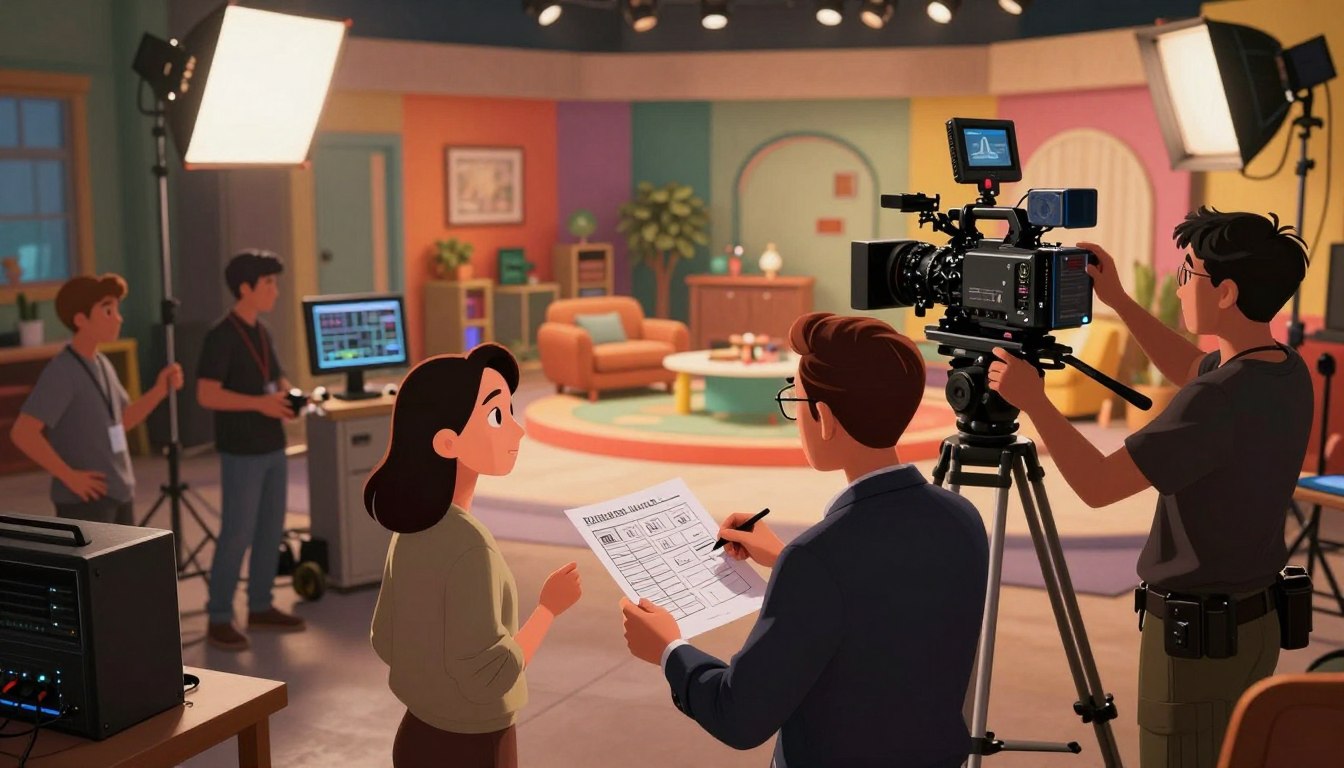
A dedicated crew handles lighting, camera, sound, and logistics so filming runs on schedule. Companies like NEEDaFIXER assemble local film crews, secure permits, and manage locations for shoots anywhere in the world.
Understanding this work means looking past glamour to real planning and effort. From set design to coordination, each role keeps a shoot safe and efficient.
Readers who want a concise overview can follow a trusted primer on the craft at filmmaking stages and crew roles. This article will unpack how production teams collaborate to make movies that resonate worldwide.
The Foundation of Behind the Scenes of Movie Production
Before cameras roll, careful planning shapes the vision, budget, and goals for a movie. This foundation guides every team member during pre-production and beyond.
Scriptwriting and Development
The script is the primary blueprint for any film. Producers secure rights, refine dialogue, and shape characters during development.
James Smith noted on February 24, 2025, that filmmakers often spend months or years in this phase. Storyboards and early marketing ideas help sell a project to investors.
Budgeting and Financing
Effective budgeting lets producers hire crew and rent gear. Finance decisions balance creative design with real constraints.
Casting directors work in pre-production to match actors to characters, and proper planning speeds editing and post workflows.
- Development: secure rights, polish script, early marketing.
- Pre-production: casting, crew hiring, scheduling, storyboards.
- Financing: budgets, investor pitches, equipment rental.
| Stage | Main Focus | Outcome |
|---|---|---|
| Development | Script, rights, story concept | Finalized script and pitch materials |
| Pre-production | Casting, budgeting, design | Detailed schedule and hired crew |
| Financing | Budgeting, investor agreements | Secured funds and resource plan |
Essential Roles and Creative Talent on Set
Creative talent and technical experts work together on set to shape every frame. This blend of vision and craft keeps a film moving from script to screen.
Directors and Producers
Directors like Quentin Tarantino and Ava DuVernay steer the creative vision and guide actors through each scene. Producers handle budget and schedule so the crew can focus on craft.
The Unsung Heroes of the Crew
Gaffers manage lighting to set mood while grips rig cameras and keep equipment safe. Sound mixers capture clear audio so each moment feels real. This team makes sure every scene runs on time.
Creative Artists and Designers
Art directors and costume designers build the visual world. Casting picks the right actors, then designers refine characters through costume, makeup, and set design.
- Directors guide vision and performance.
- Producers coordinate resources and time.
- Art, lighting, and sound teams shape mood and life.
| Role | Focus | Impact |
|---|---|---|
| Director | Vision, actors, camera | Coherent storytelling |
| Producer | Budget, schedule, logistics | Shoot viability |
| Sound / Lighting | Audio capture, mood | Immersive experience |
For a deeper look at specific job titles and how a crew is structured, see film crew positions.
The Production Phase and Filming Logistics
A well-run shoot relies on precise timing, reliable gear, and a focused team. During this production phase, the director and cinematographer set camera angles and lighting for each scene.
Location scouting confirms that a site matches notes from pre-production and the script. The assistant director keeps teams moving and makes sure every element meets schedule and safety needs.
Crews capture hours of footage and often repeat takes until performance and technical quality satisfy the director. Modern filmmakers use high-definition digital cameras on cranes and drones to get dynamic perspectives.
- Special effects technicians blend practical elements with visual effects and CGI on set.
- Sound teams record clean audio while lighting crews set mood and continuity.
- Some marketing materials, like early teasers, are shot during this stage to build buzz.
| Focus | Who | Outcome |
|---|---|---|
| Camera & lighting | Cinematographer, gaffer | Consistent visual tone |
| Coordination | Assistant director | On-schedule shoot |
| Effects & editing plan | Effects techs, director | Shootable scenes and clear footage |
Directors edit in mind while filming to ensure captured takes will cut cleanly in post. For information on premieres and release planning, see movie premieres.
Polishing the Final Cut in Post-Production
Post-production refines raw footage into a coherent, emotionally driven final cut. This phase brings together editors, colorists, sound designers, and visual effects artists to craft the film that audiences will watch.
The Role of Editors and Colorists
Editors work closely with the director to cut and splice hours of footage. They shape pacing, choose takes, and ensure the script’s intent survives the editing process.
Colorists adjust tone and contrast so the visual palette supports character and story. Careful grading makes scenes feel consistent across camera setups and lighting conditions.
- Sound designers and composers add music and effects to heighten emotion in each scene.
- Visual effects artists use tools like Adobe After Effects to add elements not captured on set.
- Producers and marketing teams use the final cut to assemble trailers for theaters and streaming platforms.
| Role | Key Task | Impact |
|---|---|---|
| Editors | Assemble footage, refine narrative | Coherent final cut |
| Colorists | Grade scenes, match lighting | Consistent visual style |
| VFX / Sound | Add effects, mix audio, score music | Immersive cinematic life |
Conclusion: The Collaborative Nature of Modern Filmmaking
Modern film work depends on many specialists who coordinate through every stage to reach a shared vision. From development and pre-production to final marketing, each phase links directors, producers, and artists so a story moves from script to screen.
Whether a small independent project or a major studio movie, success rests on crew dedication, casting insight, and careful location planning. Filmmakers must also adapt to the streaming world to expand a project’s life and audience.
Programs like the New York Film Academy’s Online MA in Entrepreneurial Producing teach how to manage stages of production and lead complex teams. For related inspiration on natural storytelling and fieldwork, see this nature documentaries primer: must-watch nature documentaries.